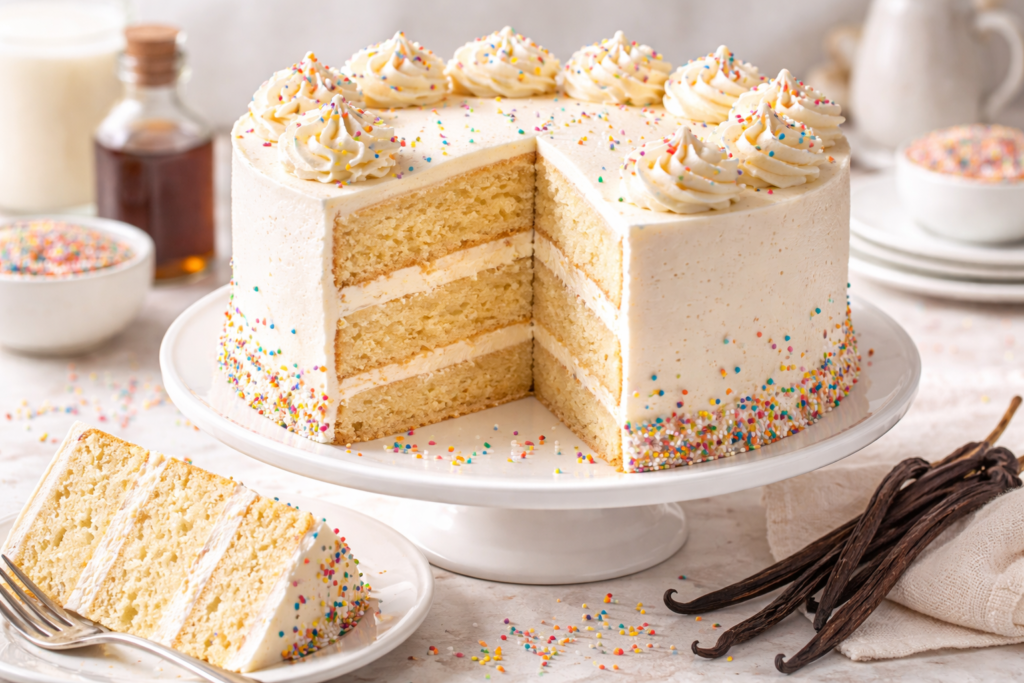
This Vanilla cake recipe creates a soft, fluffy, bakery-style vanilla cake with a tender crumb and rich vanilla flavor. It’s the kind of classic vanilla cake you can confidently use for birthday cakes, layer cakes, sheet cakes, or simple everyday desserts.
Unlike dry or bland vanilla cakes, this recipe stays moist for days and has a balanced sweetness that pairs perfectly with buttercream, cream cheese frosting, or fresh fruit. It has been tested multiple times to ensure consistent results.
If you want a simple plain recipe you can visit here
Why This Vanilla Cake Recipe Works
Vanilla cake may seem simple, but getting it right requires precision. This recipe works because:
- Butter provides rich flavor without heaviness
- A balanced liquid ratio creates a soft, even crumb
- Proper creaming incorporates air for lightness
- Vanilla is the star not masked by excess sugar
This is a true vanilla cake, not a plain white cake with vanilla added as an afterthought.
Ingredients for Vanilla Cake
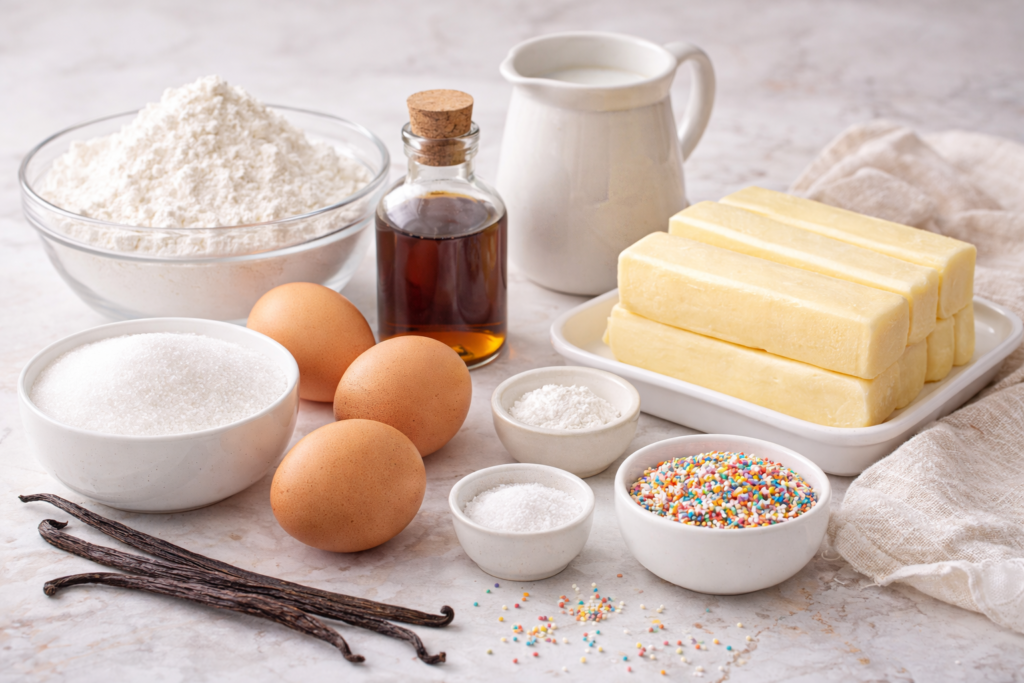
Each ingredient plays a specific role in texture and flavor.
You will need:
- All-purpose flour _ provides structure without making the cake dense
- Baking powder _ gives lift and keeps the crumb light
- Salt _ balances sweetness and enhances vanilla flavor
- Unsalted butter _ adds richness and moisture
- Granulated sugar _ sweetens and helps aerate the batter
- Eggs _ bind the ingredients and create structure
- Milk or buttermilk _ keeps the cake tender
- Pure vanilla extract _ essential for true vanilla flavor
Tips: Using room-temperature ingredients helps the batter mix evenly and prevents a dense cake.
All-Purpose Flour
All-purpose flour forms the structural base of a vanilla cake. It contains a moderate protein level that allows gluten to develop just enough to hold the cake together without making it tough or dense. This balance helps create a soft, tender crumb while still giving the cake enough strength to rise properly and support frostings or fillings.
Baking Powder
Baking powder is the primary leavening agent in a vanilla cake. It releases carbon dioxide when mixed with liquid and heated, which helps the cake rise and develop a light, fluffy texture. Without enough baking powder, the cake may turn out flat or dense. Proper leavening ensures an even crumb and bakery-style softness.
Salt
Salt plays an important role in enhancing the overall flavor of vanilla cake. It balances the sweetness of the sugar and highlights the delicate vanilla notes. Even though it is used in small amounts, salt prevents the cake from tasting flat or overlay sweet. It also slightly strengthens the batter’s structure, improving texture.
Granulated Sugar
Granulated sugar sweetens the cake and plays a key role in texture. When beaten with butter, sugar helps trap air, creating a lighter and fluffier crumb. It also retains moisture, keeping the cake soft after baking. Additionally, sugar contributes to browning, giving the cake an appealing golden color.
Eggs
Eggs act as a binding agent in vanilla cake, holding all ingredients together. The proteins in eggs help provide structure, while the fats add richness and moisture. Eggs also assist with leavening by trapping air during mixing. Properly incorporated eggs result in a smooth batter and a well-risen cake.
Milk or Buttermilk
Milk or buttermilk adds moisture and helps dissolve dry ingredients evenly. Buttermilk, in particular, adds a slight acidity that enhances tenderness and improves texture. Both liquids contribute to a softer crumb and balanced flavor. Choosing between milk or buttermilk can slightly change the cake’s richness and softness.
Pure Vanilla Extract
Pure vanilla extract is essential for delivering authentic vanilla flavor. It enhances the cake’s aroma and depth, making it taste rich and well-rounded. Artificial vanilla lacks the complexity of pure extract. Even in small amounts, real vanilla significantly improves flavor quality, making the cake taste homemade and bakery-worthy.
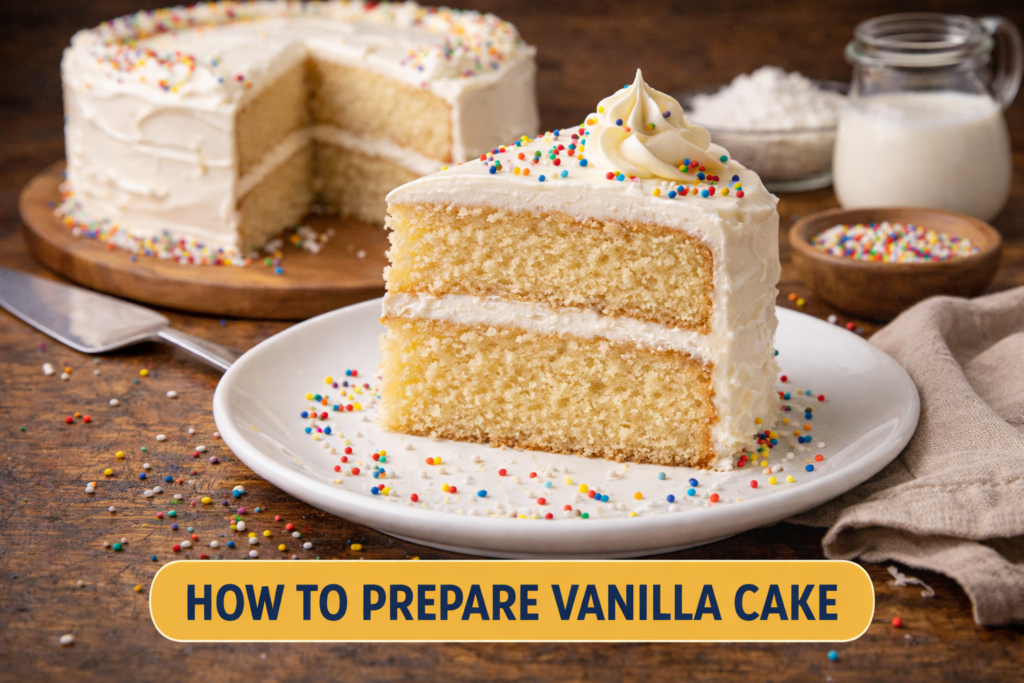
How to Make Vanilla Cake ( Step by Step)
Step 1: Prepare the Cake Pans
Preheat the oven to 350°F (175°C). Grease and line two 8- or 9- inch round cake pans with parchment paper.
Step 2: Combine the Dry Ingredients
In a medium bowl, whisk together flour, baking powder, and salt. Set aside.
Step 3: Cream Butter and Sugar
In a large bowl, beat the butter and sugar until light, pale, and Fluffy.
This step is critical _ proper creaming traps air, which gives the vanilla cake its soft texture.
Step 4: Add Eggs and Vanilla
Add the eggs one at a time, mixing well after each addition. Stir in the vanilla extract.
Step 5: Alternate Dry Ingredients and Milk
Add the dry ingredients in three additions, alternating with the milk. Mix just until combined. Do not overmix _ this keeps the cake tender.
Step 6: Bake
Divide the batter evenly between the pans. Bake for 30_35 minutes, or until a toothpick inserted into the center comes out clean.
Step 7: Cool Completely
Allow cakes to cool in the pans for 10 minutes, then transfer to a wire rack. Cool completely before frosting.
Best Frosting for Vanilla Cake
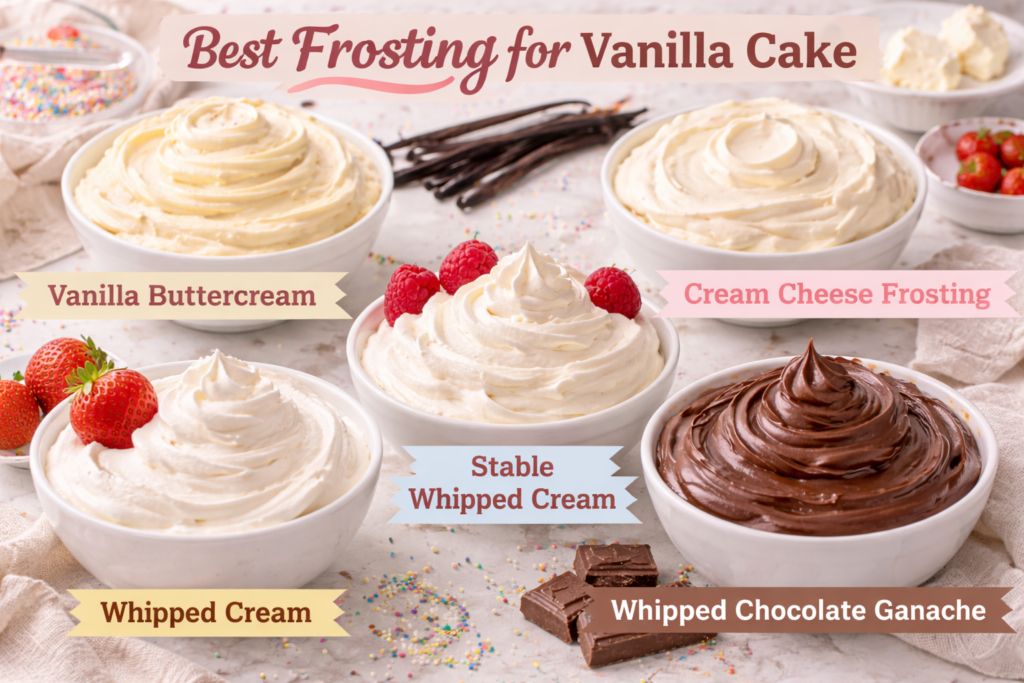
This vanilla cake is versatile and pairs well with many frostings:
- Vanilla buttercream – classic and smooth
- Cream cheese frosting – slightly tangy and rich
- Chocolate frosting – perfect for contrast
- Whipped frosting – light and airy
This makes the cake suitable for birthdays, weddings, and celebrations.
Vanilla Cake Variations
One reason vanilla cake ranks so well in search is its versatility. This recipe can easily be adapted into:
- Layer cake
- Sheet cake
- Cupcake
- Small vanilla cake
- Cake with fruit or jam filling
The batter also works well for simple decorations or fully frosted celebration cakes.
Vanilla Layer Cake
A layer cake is a classic celebration dessert made with two or more soft cake layers stacked with frosting in between. This version focuses on a light, fluffy crumb that can support fillings and frostings without collapsing. Vanilla layer cakes are ideal for birthdays and special occasions because they offer visual appeal, balanced sweetness, and versatility with different frostings or fillings.
Vanilla Sheet Cake
Sheet cake is baked in a single rectangular pan, making it easy to prepare and serve. This version is known for its even texture, moist crumb, and simple presentation. Sheet cakes are perfect for parties, potlucks, or family gatherings because they feed a crowd efficiently. The vanilla flavor remains mild and comforting, often paired with a smooth frosting spread evenly across the top.
Vanilla Cupcake
Vanilla cupcakes are individual-sized versions of classic cake, offering convenience and portion control. This version focuses on a soft, tender crumb that stays moist while holding its shape in a cupcake liner. Vanilla cupcakes are popular for events and bake sales because they are easy to decorate, store, and serve. The vanilla flavor pairs well with buttercream, whipped frosting, or fruit toppings.
Small Vanilla Cake
A small vanilla cake is designed for smaller households or intimate celebrations. This version uses reduced quantities while maintaining the same soft texture and rich vanilla flavor as larger cakes. Small cakes are perfect for weeknight desserts, anniversaries, or when you want a homemade treat without leftovers. The focus remains on simplicity, freshness, and balanced sweetness.
Vanilla cake with Fruit or Jam Filling
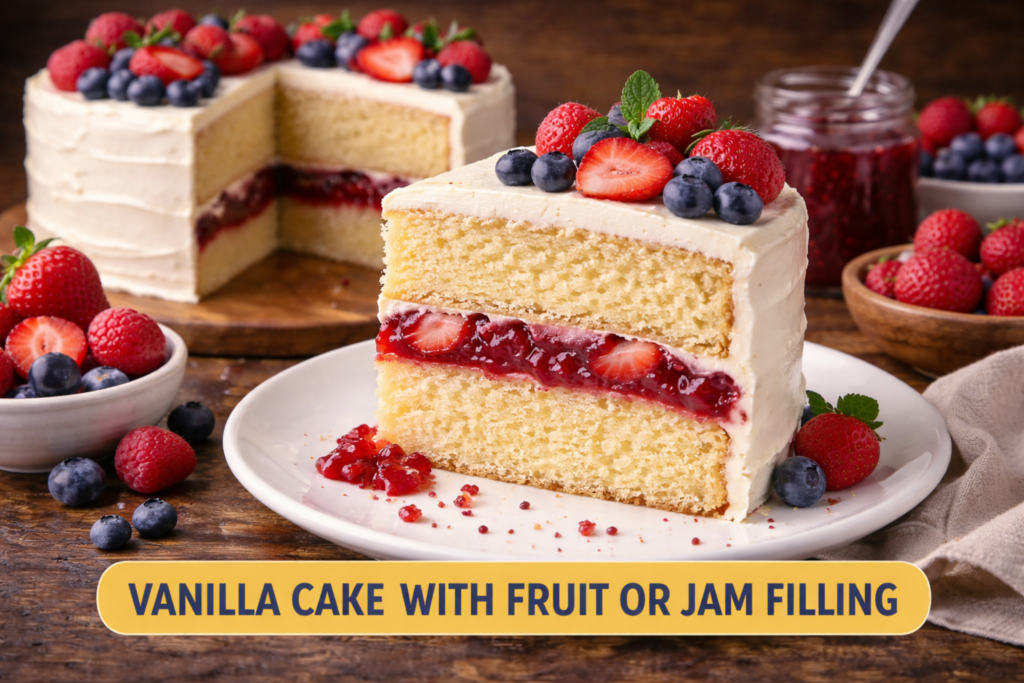
The cake with fruit or jam filling adds a fresh, flavorful contrast to the soft cake layers. This version combines light vanilla sponge with sweet or tangy fillings such as strawberry jam, raspberry preserves, or fresh fruit compote. The fruit enhances moisture and adds natural sweetness, making the cake taste brighter and more complex without overpowering the vanilla base.
Tips for a Perfect Vanilla Cake
- Measure flour correctly too much causes dryness
- Cream butter and sugar thoroughly
- Use real vanilla extract, not imitation
- Avoid overbaking, even by a few minutes
These tips are consistently mentioned across top ranking cake recipes because they solved the most common baking problems.
Storage & Make-Ahead Instructions
- Room temperature: 2 days, well covered
- Refrigerator: Up to 5 days
- Freezer: Freezer unfrosted layers for up to 2 months
Bring to room temperature before serving for best texture.
Vanilla Cake FAQs
Why is my vanilla cake dry?
Overbaking and excess flour are the most common reasons. Always check the cake a few minutes early.
Can I make this cake ahead of time?
Yes. Bake the layers in advance and frost the next day.
Can this recipe be used for cupcakes?
Yes. Reduce baking time to 18-22 minutes.
For more recipes, click here