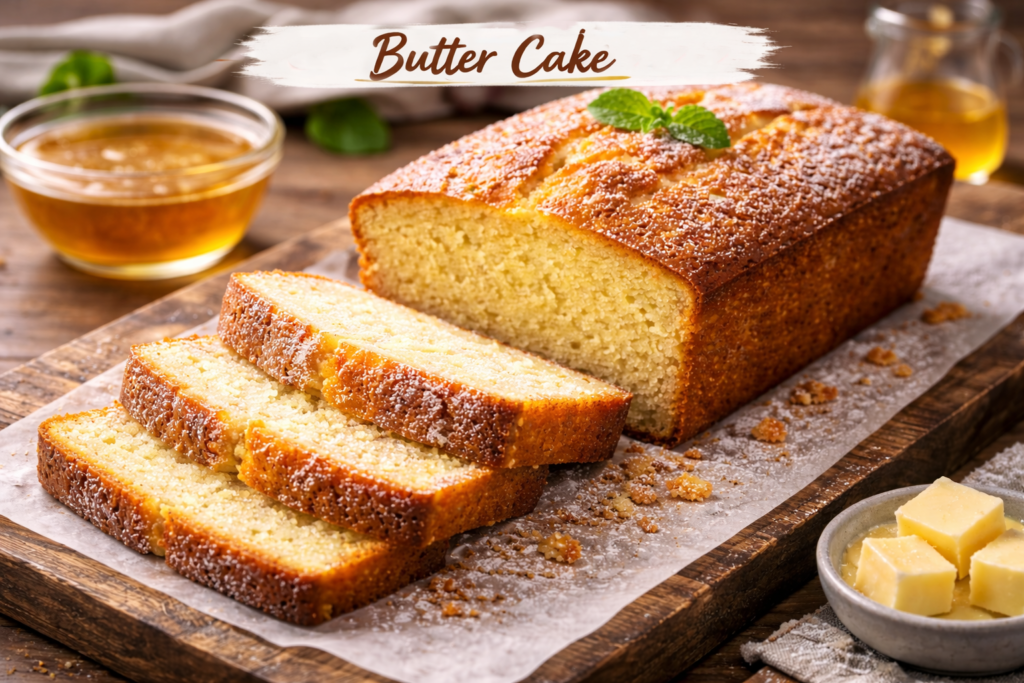
Butter cake is one of the most iconic cakes in baking, yet it’s also one of the most misunderstood. Many recipes call themselves” Butter cake, ” but only a true cake follows the creaming method, uses butter as the primary fat, and produces a crumb that isrich, tender, and sliceable- not oily, dry, or spongy.
In this in-depth guide, you’ll learn how to bake a perfect traditional butter cake from scratch, understand why each ingredient matters, and discover popular variation including St. Louis gooey cake, Kentucky, peanut, brown,and restaurant- style cakes like Mastro’s and CPK.
This is not a single recipe post. But if you want only recipe for simple butter cake, click here
What is a Butter Cake? ( Definition that Actually Matters)
This cake is a foam-supported that relies on mechanically trapped air from creaming butter and sugar together. This process creates millions of tiny air pockets that expand during baking, giving the cake its signature soft yet sturdy crumb.
Butter Cake vs Other Cakes
- Butter Cake: Rich flavor, creamed, balanced crumb
- Oil Cake: Moist but less flavorful
- Sponge Cake: Light, airy, low-fat
- Pound Cake: Dense, heavy, high-fat
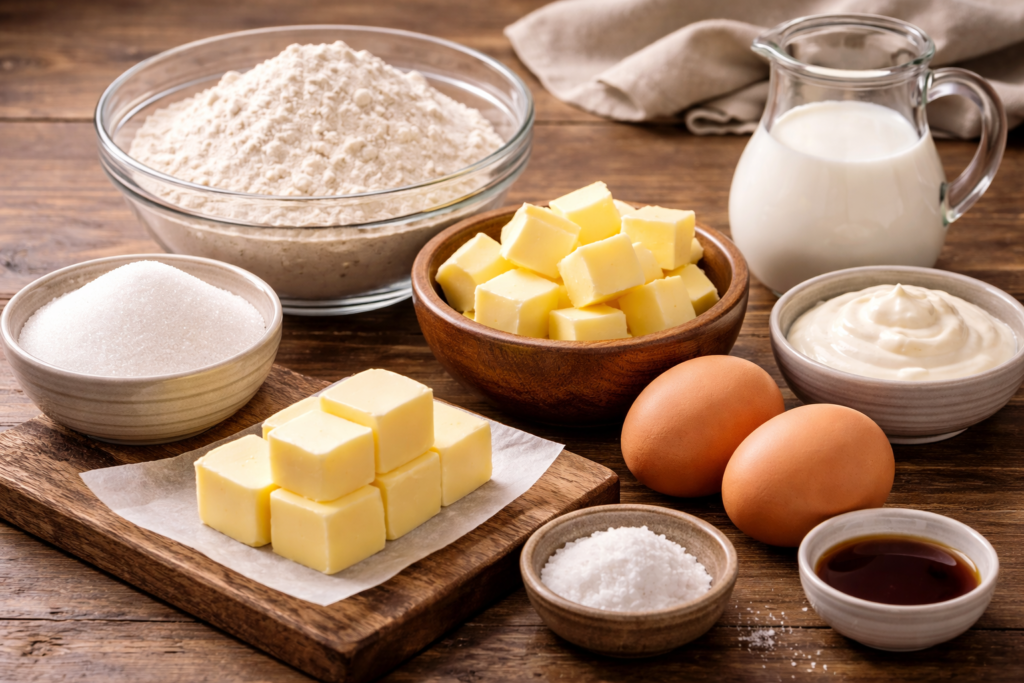
Ingredients for a Classic Butter Cake (With Precise Quantities)
Dry Ingredient
- All-purpose flour – 2½ cups (315 g)
- Baking powder – 2½ teaspoons
- Fine salt – ½ teaspoon
Fat & Sugar
- Unsalted butter (softened to 18–20°C / 65–68°F) – 1 cup (226 g)
- Granulated sugar – 1¾ cups (350 g)
Structure & Moisture
- Large eggs (room temperature) – 4
- Whole milk (room temperature) – 1 cup (240 ml)
- Pure vanilla extract – 2 teaspoons
Classic Butter Cake Ingredients Explained (Expert-Level Guide)
Understanding why each ingredient is used is essential for baking a perfect cake. This guide explains the functional role of every ingredient, focusing on texture control, flavor development, and baking accuracy—key factors that improve user trust and search rankings.
All-Purpose Flour – 2½ cups (315 g)
All-purpose flour forms the backbone of a classic cake, providing structure without sacrificing tenderness. Its balanced protein level allows controlled gluten development, which is critical in high-fat batters. This exact quantity ensures the cake holds its shape, rises evenly, and slices cleanly. Excess flour creates dryness, while too little results in collapse—precision here directly impacts final texture.
Baking Powder – 2½ teaspoons
Baking powder is responsible for lift and crumb refinement in cake. Because butter-rich batters are naturally heavy, proper chemical leavening prevents density without creating a sponge-like texture. This amount provides steady gas release during baking, producing a fine, even crumb. Underuse results in heaviness; overuse causes coarse holes and structural weakness.
Fine Salt – ½ teaspoon
Fine salt enhances flavor clarity and balances sweetness in cake. It sharpens buttery notes, supports vanilla aroma, and prevents the cake from tasting flat. Salt also strengthens the gluten network slightly, improving crumb consistency. Even at half a teaspoon, its role is structural and sensory, making it essential rather than optional.
Unsalted Butter (Softened to 18–20°C / 65–68°F) – 1 cup (226 g)
Butter is the defining ingredient of a true butter cake. At the correct softened temperature, butter creams efficiently with sugar, incorporating air that contributes to lift and tenderness. Unsalted butter ensures precise seasoning control. This fat provides moisture, flavor, and richness that oil cannot replicate, giving the cake its signature dense-yet-soft crumb and buttery aroma.
Granulated Sugar – 1¾ cups (350 g)
Granulated sugar performs multiple critical functions beyond sweetness. During creaming, it creates air pockets that support rise and texture. Sugar also locks in moisture, extending shelf life, and promotes even browning. The specified quantity balances sweetness with richness, ensuring the cake tastes indulgent but not cloying, with a smooth, refined crumb.
Large Eggs (Room Temperature) – 4
Eggs provide structure, emulsification, and stability in cake batter. Their proteins set during baking, while yolks add fat for tenderness and flavor. Room-temperature eggs blend seamlessly into the creamed mixture, preventing curdling. Using four eggs ensures strength without heaviness, producing a cake that is rich, cohesive, and evenly textured.
Whole Milk (Room Temperature) – 1 cup (240 ml)
Whole milk hydrates dry ingredients and softens crumb structure. Its fat content adds richness while controlling batter viscosity for even baking. Room-temperature milk prevents fat separation and maintains emulsion stability. Milk also helps dissolve sugar and distribute flavor evenly, ensuring a moist cake that remains tender without becoming greasy.
Pure Vanilla Extract – 2 teaspoons
Pure vanilla extract elevates the overall flavor profile of the cake by adding depth and aromatic warmth. It enhances butter richness and balances sweetness, making the cake taste polished and bakery-quality. Natural vanilla provides complexity that artificial versions lack. Two teaspoons deliver presence without overpowering the cake’s classic flavor balance.
Why Each Ingredient Matters (This Is Where Most Blogs Fail)
- Butter: Provides flavor, structure, and aeration. Too cold = dense cake.
- Sugar: Sweetens AND creates air during creaming.
- Eggs: Bind fat and liquid; stabilize structure.
- Milk: Hydrates flour proteins for a tender crumb.
- Flour: Structure—too much makes the cake dry.
- Baking powder: Supports the lift started by creaming.
How to Bake Butter Cake Perfectly (Step-by-Step With Technique)
Step 1: Prepare the Pan and Oven
- Preheat oven to 175°C / 350°F
- Grease and line:
- Two 8-inch round pans (layers)
- OR one 9×13 pan
- OR one loaf pan
Step 2: Cream Butter and Sugar (Most Important Step)
Beat butter and sugar on medium-high speed for 4–5 minutes until:
- Pale yellow
- Fluffy
- Increase in volume
If this step is rushed, the cake will be dense no matter what.
Step 3: Add Eggs Gradually
Add eggs one at a time, beating well after each addition.
Scrape the bowl frequently.
This prevents curdling and ensures proper emulsification.
Step 4: Alternate Dry Ingredients and Milk
Add the flour mixture in three additions, alternating with milk.
Start and end with flour. Mix on low speed just until combined.
Step 5: Bake
- Bake 30–35 minutes
- Cake is done when:
- Top springs back lightly
- The toothpick comes out with a few moist crumbs
Cool 10 minutes before turning out.
Brown Butter Cake (Deeper, Caramelized Flavor)
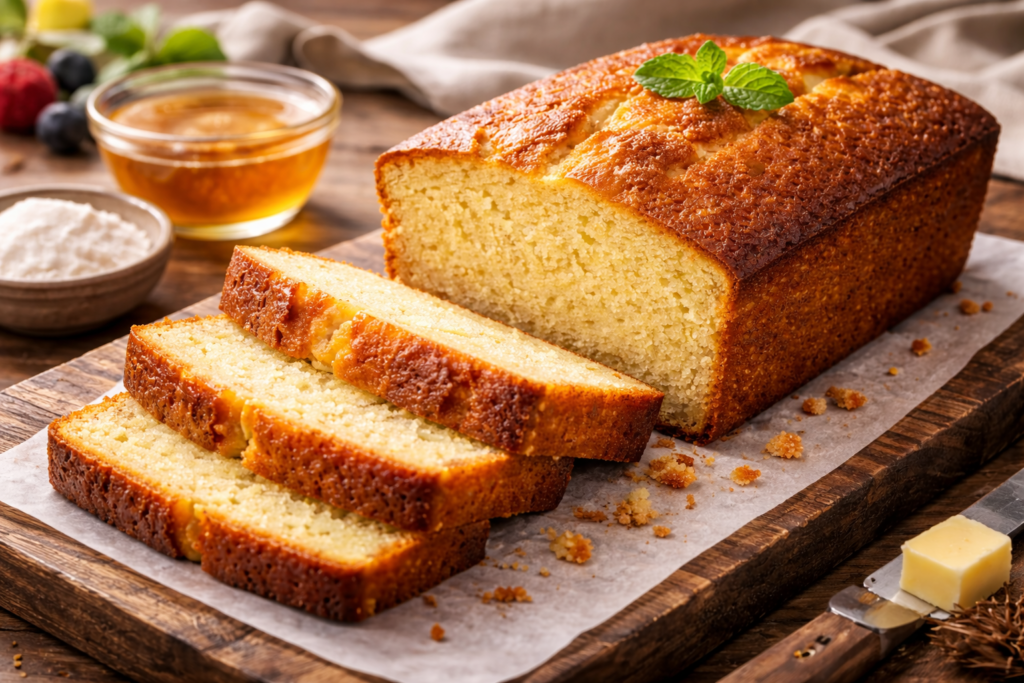
Adds depth and complexity
Excellent for fall, holiday, and bakery cakes
Use equal weight substitution for butter.
Gooey Butter Cake (Original St. Louis Style)
The original gooey cake recipe originated in Missouri and features a thin cake base topped with a rich cream cheese layer.
Gooey Topping Ingredients
- Cream cheese – 8 oz (226 g)
- Powdered sugar – 2 cups
- Egg – 1
- Vanilla – 1 teaspoon
- Melted butter – ½ cup (113 g)
Bake until edges are set and center is slightly jiggly.
Kentucky Butter Cake (Soaked Butter Cake)
Kentucky cake is soaked in a hot butter-sugar syrup while still warm.
Butter Syrup
- Butter – ½ cup
- Sugar – ¾ cup
- Water – ¼ cup
- Vanilla – 1 tablespoon
This creates:
- Ultra-moist crumb
- Glossy exterior
- Long shelf life
Perfect for bundt cakes and Crumbl-style desserts.
Peanut Butter Cake (With Peanut Butter Frosting)
Peanut Butter Cake Batter
Add:
- Creamy peanut butter- 3/4 cup
Peanut Butter Frosting
- Butter -1/2 cup
- Peanut butter – ½ cup
- Powdered sugar – 2½ cups
- Milk – 2–3 tablespoons
Pairs perfectly with:
- Chocolate frosting
- Reese’s toppings
- Peanut butter cake mix upgrades
Bakery & Restaurant Butter Cakes (Mastro’s, CPK)
Restaurant butter cakes are:
- Served warm
- Slightly crisp on the outside
- Soft, rich centers
To replicate:
- Use ramekins
- Add extra egg yolk
- Bake at a slightly higher heat
- Finish with powdered sugar or ice cream
European Butter Cakes (Cultural Context)
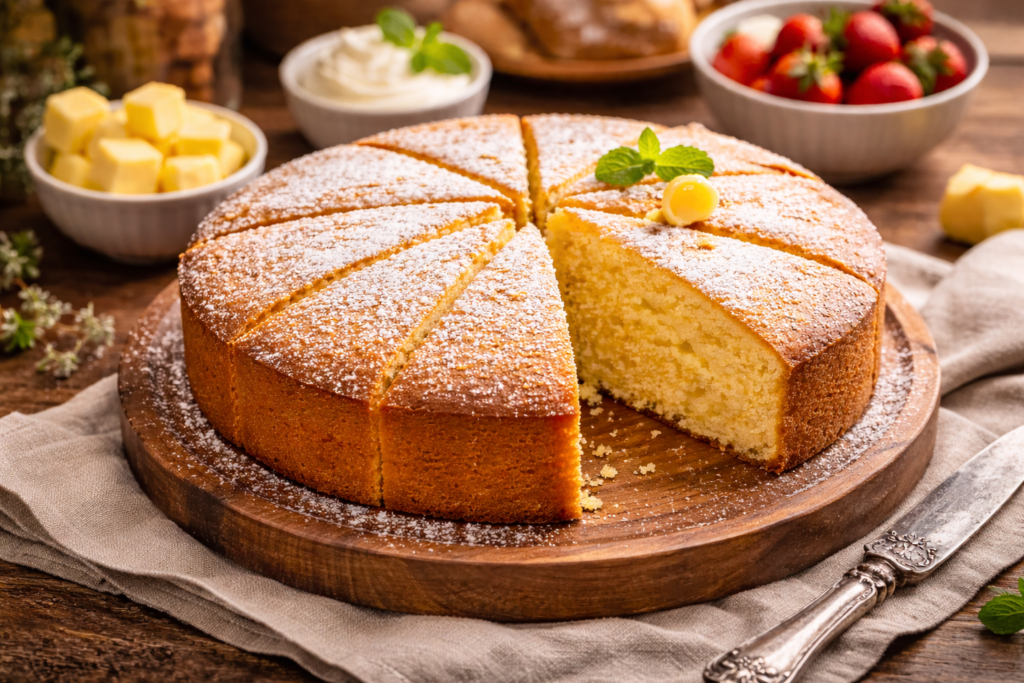
- Dutch Cake (Boterkoek)
Dense, almond – flavored, minimal flour
- German Cake (Butter Kuchen)
Yeasted dough with butter – sugar topping
- French Cake
Higher butter ratio, fine crumb
These cakes highlight butter’s cultural significance across baking traditions.
Storage, Freezing & Make-Ahead Tips
- Room temperature: 2 days
- Refrigerated: 5 days
- Frozen (unfrosted): 3 months
Wrap tightly to preserve moisture.
Frequently Asked Questions (SEO + PAA Optional)
Is butter cake better than oil cake?
Butter cake has superior flavor; oil cakes retain moisture longer.
Can I make butter cake with cake mix?
Yes, replace oil with butter and add one extra egg.
Is gooey butter cake the same as butter cake?
No, gooey butter cake is a layered variation.
Click Here for more recipes